
In their bones
friday dispatch: kids and childcare at Mass

To begin, a snapshot of my headspace the day I told my husband that I wanted a moratorium on going to Mass with the whole family:
For the foreseeable future, I said, we are doing this in shifts. We trade off taking the preschooler. And the little ones aren’t going at all. We agreed. Since then, we’ve attended Mass as a family of five three times for special occasions, but besides that the moratorium has stood. One Sunday morning, when a friend asked me where’s Will this morning? I said, carelessly, “Oh, we decided to split up for a few weeks.” It took me a moment to realize why he was apparently taking this as very bad news. “Oh, no—split up for Mass … sorry.”
Going to Mass alone for so many weeks has been desolate, lonely, and shameful—ha, just kidding! It’s been freaking amazing. I have sat with friends! I have listened to homilies! Heck, some Sundays I’ve actually prayed, and felt … what’s the word … oh, better leaving than when I came, instead of the usual other way ‘round. Because we really have been getting our asses handed to us at Mass, friends, and I needed a good long break to recoup and refocus on why we even bother to do this very inconvenient, very difficult, and seemingly very fruitless thing week after week after week.
I want to get back to the note I posted and share a few of the replies, which fell roughly into the following categories:
The “Suck it up” approach: one commenter wrote, “Catholic Mass ‘childcare’ is called the cry room. Every older Church has one … there is your childcare!” Another, “it is possible to get through mass with children. Discipline starts at home … offer it up and keep praying and working at discipline.” These commenters clearly think I’m just a snowflake, and they’re correct. I am. A snowflake who can’t hack the Da Vinci Code of whatever other parents are doing to get their three or six or eight kids to sit nicely in the pew like like little nesting dolls. My kids more resemble Weebles. Adorable, breathtakingly sweet, and very funny Weebles.
The “No, YOU suck it up” approach: I so appreciated the comments from parents who also have Weeble children. Is it really fair, they protest, for us to expect children to behave like adults? Can we blame them for acting out of place in an environment that is not made for them? Adults can self-regulate—and should—and therefore they should lay off the kids. Parents, in turn, should give themselves and their children grace and, on a good day, lean into the hilarious chaos of it all. Patrice Critchley-Menor took the cake on this one:
The “Offer it up” approach: Because you “get the grace” just by being within a hundred yard radius of the sanctuary, apparently. Embrace the suck with a spirit of self-sacrificial love, go in with low expectations, and hold on for dear life for the next ten years! You’ll get back in there, eventually. Among this crowd there is a strong sense that kids ought to go to Mass and parents ought to bring them, regardless of what bringing them might mean for the family’s morale and mental stability. The grace is the same is a common refrain here—but is it? Is it really? There’s certainly something going on between me and God as I’m chasing my manic toddler into the men’s bathroom, and it’s … different … than the experience of getting to sit and participate in Mass. This whole the grace is the same thing feels weirdly legalistic, like all I ought to care about is getting the grace, making sure my name gets on the list, doing the thing just to do it—and, by the way, piously offering up my disappointment and frustration at not actually getting to do that thing, but instead having to do this thing, the thing I already do at my house all day long—chasing toddlers around to stop them from electrocuting themselves—except now I’m just doing it in an uncomfortable dress, surrounded by breakable objects and six hundred people trying to pray quietly.
I received one comment, though, that caught my attention in a different way, and that I want to give some thought to:
In all seriousness, why take a child to Mass? Why drag them along with you week after week, month after month, year after year? Is it all for show? To be a “good” Catholic family? To ensure good outcomes for your children (studies show that children whose parents bring them to Mass every week …)?
We bring them, this commenter argues, because when you have done the long and difficult work of habituating children into the liturgy, the liturgy itself takes a certain possession of them—it’s in their bones. Silently, patiently, grace etches within them the shape of the Mystery. Good Sundays, bad Sundays, didn’t-make-it-past-the-parking-lot Sundays: all to the same end, that these little ones would come to inhabit a world of signs that point to a Living Presence. Simple gestures, simple matter—water, bread, fire—deep grooves worn over time, well-traveled pathways to the Father’s house.
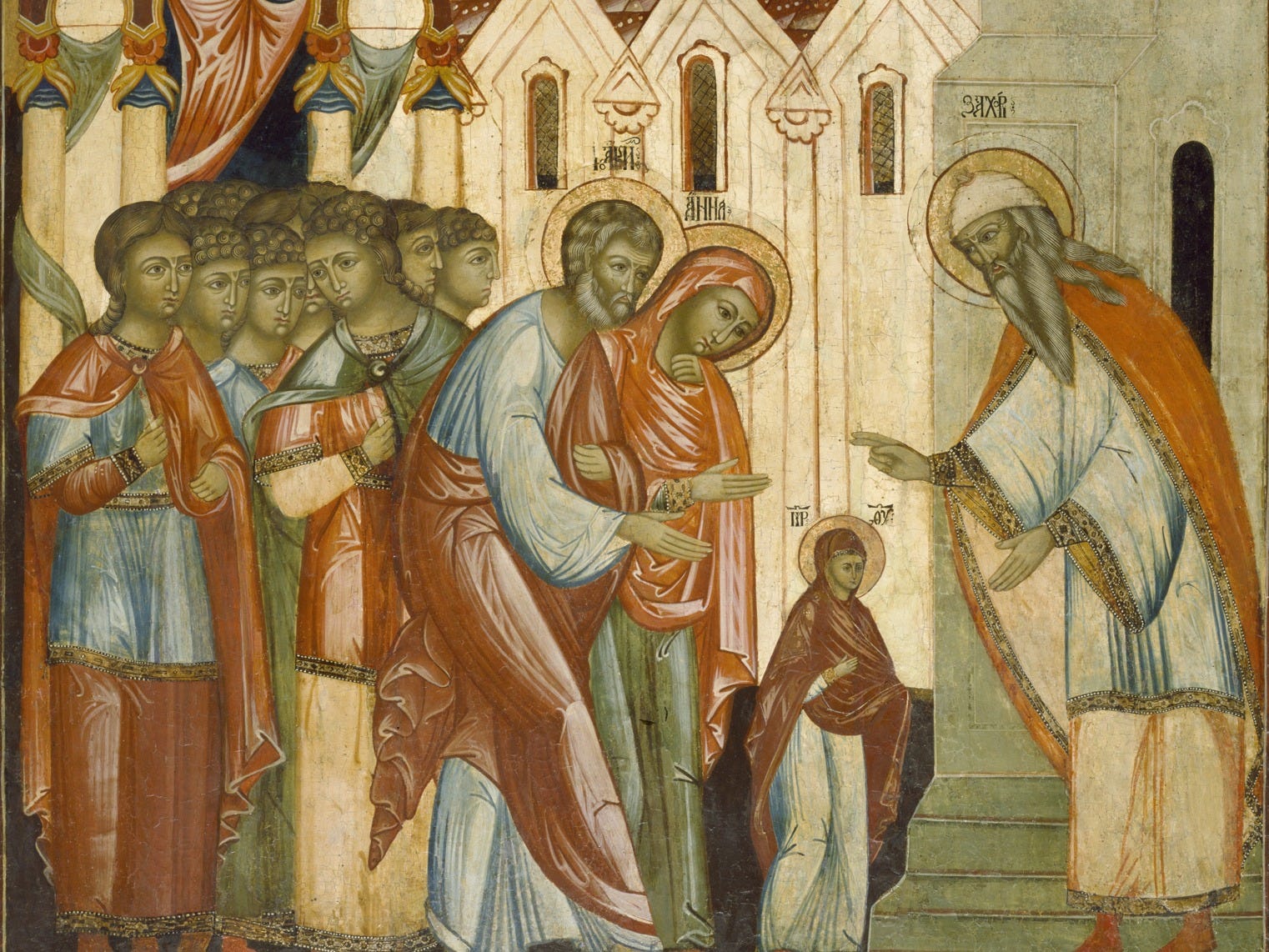
Catholics have a word for this: mystagogy. Unlike pedagogy, which focuses on the discursive aspects of knowledge, mystagogy is the process by which we know by experience; it is an embodied, relational way of learning that occurs when we come into vital contact with reality and allow it to shape us. Pedagogy is reading a man’s biography; mystagogy is falling in love with him. The kind of knowledge we get in mystagogy is spousal, covenantal; it is a knowing that embeds itself in us forever, names us, blesses us. And while pedagogy has its place, it is never enough to simply know about God; we need to know him and know ourselves to be known by him.
How does my daughter know that I am her mother? Should I attempt to explain the mechanics to her? No, she knows—she knows in and with her whole being that I am mom, without knowing at all what motherhood physically entails. The reality of mom emerges on her horizon before the possibility of any definitions or syllogisms or maternity tests. I am mom. Mom is me. Mom is a shower of a million tiny moments: skin on skin, the smell of my hair, the sound of my voice saying her name—over and over and over. Someday she’ll learn about female anatomy and the human reproductive system and go “oh my God, you did what? I was where? You fed me with what?” But that, in the end, is all just clinical description when compared with the lived experience of the reality, mom.
So again: why bring your kid to Mass? So she can come into contact with Reality in the Church. So she can know life in the Body of Christ, know Jesus in the Blessed Sacrament, know that God’s love for her is a story ever unfolding and ever deepening. “The best catechesis on the Eucharist is the Eucharist itself,” wrote Pope Benedict XVI in Sacramentum caritatis. In those creaky old pews, our children learn to inhabit a cosmos shot through with significance, to read signs and interpret images, to feel Church in their bodies, not just think it in their brains. The smell of the carpet, the stickiness of the faux leather kneelers, the familiar melodies—all of this leaves its mark, all of it imprints the soul with a sense of belonging and becoming, call and response.
Pope Francis wrote in his 2022 apostolic letter Desiderio desideravi about the role of mystagogy in our lives of faith, describing how the earliest experiences of the sacramental life of the Church can make their mark on our unfolding lives of faith:
Many of us learned the power of the gestures of the liturgy from them, as, for example, the sign of the cross, kneeling, the formulas of our faith. Perhaps we do not have an actual memory of such learning, but we can easily imagine the gesture of a larger hand taking the little hand of a child and accompanying it slowly in tracing across the body for the first time the sign of our salvation. Words accompany the movement, these also said slowly, almost as if wanting to take possession of every instant of the gesture, to take possession of the whole body: “In the name of the Father… and of the Son… and of the Holy Spirit…. Amen.” And then the hand of the child is left alone, and it is watched repeating it all alone, with help ready nearby if need be. But that gesture is now consigned, like a habit that will grow with Him, imparting to it a meaning that only the Spirit knows how. From that moment forward that gesture, its symbolic force, is ours, it belongs to us; or better said, we belong to it. It gives us form. We are formed by it. Not many discourses are needed here. It is not necessary to have understood everything in that gesture. What is needed is being small, both in consigning it and in receiving it. The rest is the work of the Spirit.
The rest is the work of the Spirit. May it be so with us, and our children, and our children’s children.
Thank you for reading! I am a full-time working mom of three—meaning I write these little essays in my spare time—and am super glad to make them available for you to read at no cost. However, should you find yourself inclined to support the work I do here at Recovering Catholic, you can do so either by subscribing or by sending a tip via Buy Me A Coffee.
The next-best thing you can do? Share this post on Substack or with a friend. It helps other people who might appreciate conversations like this one.
I don’t know if your life allows you to pull off daily mass occasionally but I go often with my niece and her kids. They’re not consistently well-behaved, but there’s a strange level od attention. Sometimes the four year old beats father to “behold the Lamb of God” and sometimes he shouts alleluia. They have more space to be at daily mass and the elderly love them. Their mom doesn’t get to pray as much as she’d like, but there have been gains over time from the repetition.
We’ve gone through periods of splitting Mass up when my boys were all under 5 and really struggling, but I can say that what Anamaria (the commenter you reference who happens to be a friend of mine) said is true: my boys are now 8, 5, and 3, and although we have to take our 3 year old out almost every week for at least part of the time, the older two are well behaved for the most part. It is in their bones, and I can see how all of our hard work in bringing them is paying off. My husband joked the other day that when Jesus says you have to love him more than your family/children, it’s hard to envision what he means, except when you consider that taking them to mass when they’re little IS loving Jesus more than 1) your own comfort and 2) your kids’ comfort.